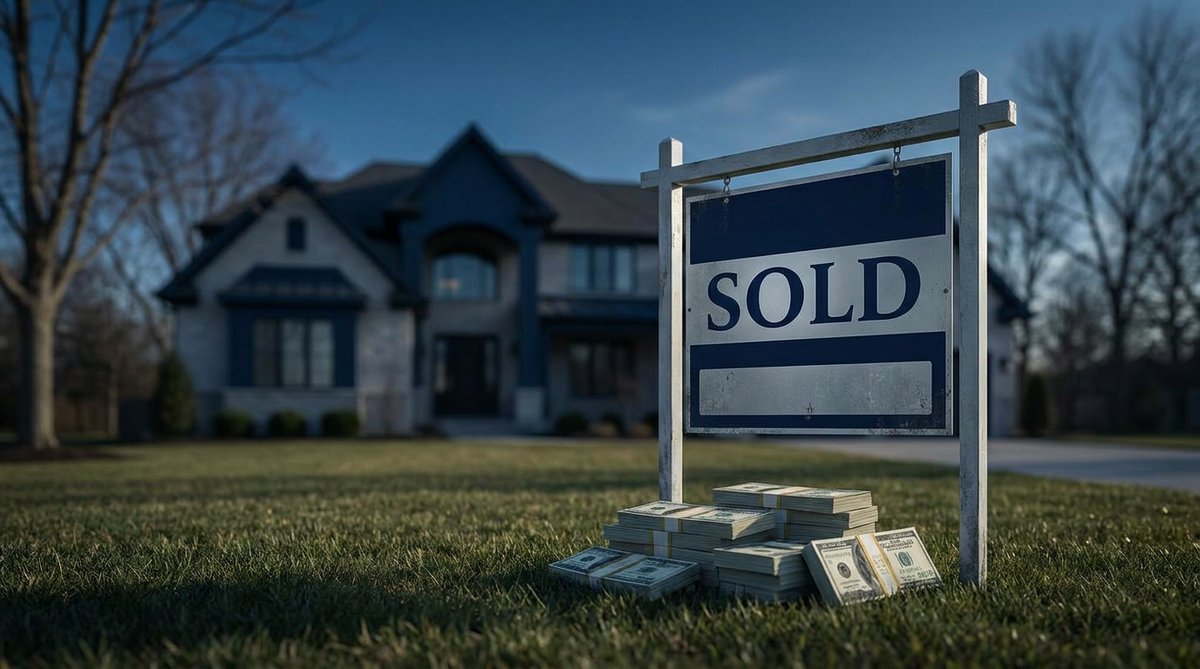
You made what felt like a smart, disciplined call. You sold, you sat on the cash, and you waited for the crash everyone promised. Then prices went up, and every month since has felt like watching the door close. If you're carrying that pit-in-your-stomach "I blew it" feeling — I want to take some weight off your shoulders. You didn't blow it. You're in a position a lot of stuck buyers would trade for. Let me show you why, and how to stop losing from here.
You're not behind — you're liquid
Here's the reframe nobody offered you: a homeowner who's frozen by a low rate is stuck. You are liquid. You're holding cash, and cash is the rawest form of optionality there is. You can rent, buy, wait, move cities, change your mind — all without a house tying you down. That's not a loss column. That's a position of strength you haven't been using like one.
Yes, prices moved against the bet. But the only way that becomes a permanent loss is if you let the regret push you into a worse decision now. The past sale is a sunk cost. The cash on hand is a live asset. Play the asset.
The worst move now is a panicked one
There are exactly two panic moves, and they pull in opposite directions — which is what makes this so disorienting.
| Panic move | What it feels like | Why it hurts you |
|---|---|---|
| FOMO buying the top | "I have to get in NOW before it's worse" | You overpay for a home that doesn't fit, just to stop the anxiety — and you're stuck with the mistake for years. |
| Freezing forever | "I'll wait until it's obviously safe" | It's never obviously safe. You rent indefinitely while your cash quietly erodes and life passes the house by. |
Both come from the same place: letting emotion drive. The cure isn't to pick a direction harder — it's to replace the emotion with a plan and a trigger.
Selling didn't bench you — it made you a free agent with cash to spend. A free agent doesn't sign with the first team that calls out of panic, and doesn't refuse to sign at all out of fear. They wait for the right fit, then commit fully. Your job now isn't to chase the market up or hide from it. It's to wait for your deal and sign it with conviction.
Define your "good enough" home and payment
Regret loves a moving target. If you're secretly waiting to buy back the exact house you sold at the exact price you sold it for, you'll wait forever and feel terrible the whole time. Instead, write down — on paper — what good enough looks like: the home that genuinely fits your life and a monthly payment you can comfortably carry. The moment you define "good enough," you give yourself permission to act when it appears, and you stop measuring everything against a past that's gone.
Keep the cash working — safely
While you wait for your trigger, don't let the down payment sit idle in a checking account losing a quiet race against inflation. People in this spot commonly park near-term cash somewhere safe and liquid — think high-yield savings or short-term Treasuries — so it earns something without being exposed to the swings of money you might need in months, not years. This is educational, not investment advice, and the right home for your cash depends on your timeline and risk tolerance. The point is simple: money you'll use soon should be working safely, not sleeping.
Buy on YOUR trigger, not the headlines
This is the whole game. The headlines will never give you a clean "now is the time" signal — they're built to keep you anxious, not to time your life. Your trigger is personal and concrete: a specific home that fits your life, at a payment you can comfortably carry. When that shows up and you're pre-approved with your cash working safely, you act. When it doesn't, you wait — calmly, productively, not in dread. That's the difference between waiting with a plan and just being stuck.
The real reframe
You didn't lose a house. You converted a house into options. Options have real value — but only if you spend them deliberately. The mistake wasn't selling. The only mistake left to make is letting regret spend your options for you, on the wrong house at the wrong moment. Don't. Spend them wisely, on your terms.
Questions to ask yourself before you act
- "What does good enough actually look like — the home and the payment — written down?"
- "Is my down-payment cash working safely, or sitting idle losing to inflation?"
- "Am I pre-approved so I can move the day the right home appears?"
- "Is this purchase my trigger — a home that fits my life — or a reaction to a headline?"
Turn your cash into a calm plan
Grab the free Stuck Homeowner's Playbook and build a trigger-based plan so you buy on your terms — not out of FOMO or fear.
Get the Free Playbook →Frequently asked questions
Related free tools: Down Payment Savings Planner · Rent vs. Buy calculator · the full Playbook
Educational content only — not financial, mortgage, investment, or legal advice, and not a loan offer or solicitation. Timothy George is the founder of Infinity Financial Mortgage Corporation and a former mortgage professional who has been in the mortgage business since 2007; he is not currently licensed, and this is independent educational material. Account types, yields, loan pricing, and rules vary and carry their own risks — confirm specifics with a currently-licensed professional before you act.